Mind Honey Pro Official Website › Blog › Arginine In Milligrams
Arginine Sold In Milligrams, Studied In Grams
Arginine is the most studied compound on most cognition labels and almost none of that research used a milligram dose. This is what the trials actually gave people, how to convert a printed row into an amount of the real amino acid, and why the gap is a fact rather than an accusation.

- The one randomised cognition trial on oral L-arginine used 6.4 g a day for 30 days.
- The ten trials pooled in a 2019 meta-analysis used 1.5 to 5 g a day.
- Both published arginine-AKG trials used 12 g a day.
- A 2:1 AKG extract is roughly two thirds arginine, so a 200 mg row carries about 133 mg.
- Oral arginine is heavily metabolised before it reaches the circulation, which is why the protocols reach for grams.
- A printed milligram figure is still worth more than a blend total, because only a printed figure can be compared with anything.
Why the trials are written in grams
Arginine taken by mouth has a difficult journey. A large share is consumed by the gut wall and the liver before it reaches the general circulation, a process that does not scale neatly, so a modest oral dose can produce very little change in plasma arginine.
Researchers respond to that by giving more. That is the entire reason a compound the body handles in milligrams is studied at several grams a day, and it is also why the smallest doses in the literature are still far larger than anything a multi-ingredient capsule carries.
The consequence for a capsule
A seven-row panel has to fit seven things into one capsule. Something in the range of a few hundred milligrams per row is the practical ceiling, and a gram-scale protocol simply does not fit in that format. That is a constraint of the delivery form rather than a decision any particular seller made.
What the studies actually gave
| Study | What it gave | For how long | What it measured |
|---|---|---|---|
| The randomised cognition pilot | 6.4 g of oral L-arginine a day | 30 days | Cognitive scores in older adults; 38 randomised, 35 completed |
| The 2019 meta-analysis of ten trials | 1.5 to 5 g a day | Weeks to months | A urological outcome, pooled across ten randomised trials |
| The arginine-AKG pharmacokinetic study | 4 g three times daily, 12 g a day | Eight weeks | Plasma levels, safety and exercise performance in trained men |
| The AAKG blood-flow trial | 12 g a day | Seven days | Blood flow and plasma arginine after resistance exercise |
| The head-to-head against citrulline | 3 g of citrulline twice daily | Seven days | Trough plasma arginine, against oral arginine at the same molar dose |
| The graded safety study | 12 g a day, then graded to 30 g a day | 90 days | Tolerability of sustained high intakes in adults |
Every figure read out of that paper’s own abstract. All six are gram-scale protocols.
The cognition pilot is the one worth dwelling on, because it is the only randomised cognition trial on oral L-arginine in the literature. It randomised 38 people and 35 finished, with sixteen in the arginine arm, and its authors describe it as a pilot. The dose was 6.4 g a day for 30 days.
The 2019 meta-analysis is the source of the range most often quoted for this compound: ten randomised trials at 1,500 to 5,000 mg a day. It is a urological literature rather than a cognitive one, and it is cited here only because it establishes the amounts at which oral arginine has been shown to do anything measurable in people.
The two AAKG trials are unusually consistent with each other. The pharmacokinetic and safety study gave 4 g three times daily for eight weeks; the blood-flow trial gave 12 g a day for seven days and reported that plasma arginine rose while blood flow did not.
Converting a printed row into arginine
Two of the rows on a panel like this one are arginine, and they do not both mean the same thing. Converting them is a minute of arithmetic and it changes the total.
| What a label row says | What it resolves to | Against the trials above |
|---|---|---|
| L-Arginine (base) 200 mg | 200 mg of arginine, nothing to subtract | About one thirty-second of the cognition pilot’s daily dose |
| L-Arginine AKG 2:1 Extract 200 mg | Roughly two thirds arginine by the printed ratio, so about 133 mg | The AAKG trials used 12 g a day of the compound |
| The two rows added | About 330 mg of actual arginine, not 400 | Still an order of magnitude below the bottom of the pooled range |
| A malate or hydrochloride salt row | Less free amino acid than the printed weight | The salt partner is carried as weight and the panel rarely says how much |
Ordinary supplement arithmetic applied to printed figures. The right-hand column describes the trials rather than predicting an outcome.
The headline figure of 400 mg across two rows is what a reader adds up in his head. The honest figure is nearer 330 mg, because two thirds of an AKG extract is arginine and one third is alpha-ketoglutarate.
- A base row is the plainest entry on any panel: the printed weight is the amino acid.
- An extract row carries its partner molecule as weight, and the ratio decides how much.
- A hydrochloride or malate salt does the same thing with a different partner.
- Where the ratio is not printed, the row cannot be resolved from the label at all.
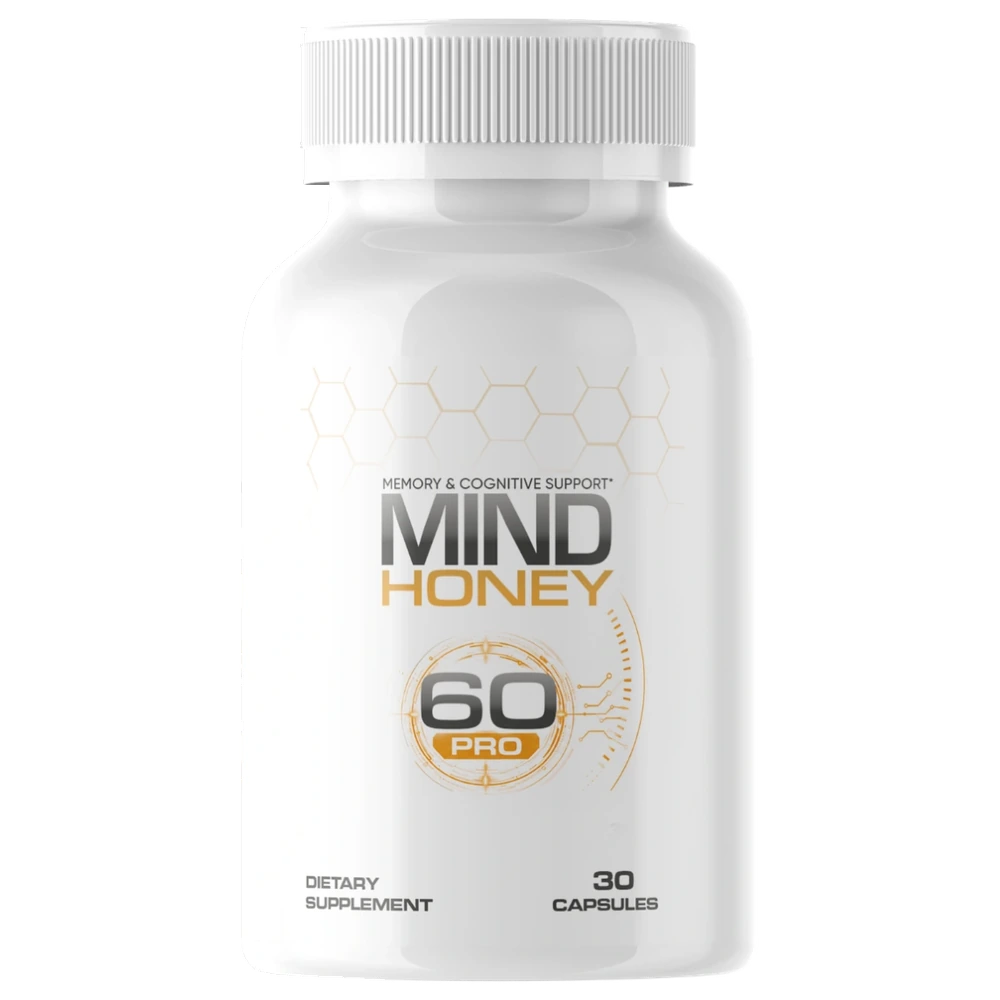
Order Mind Honey Pro with the arithmetic already done
Seven actives with every milligram printed, one capsule a day, and 180 days from purchase — long enough to run any comparison in this article for yourself.
Two bottles $158 · six bottles $294 · 180-day money-back guarantee
Order Mind Honey Pro On The Official WebsiteOne capsule a day · 30 per bottle · lot MIN-26/TH-5324
What the AKG row changes
Alpha-ketoglutarate is not filler. It is an intermediate in the citric acid cycle and it has its own literature, which is part of why the compound exists as a supplement ingredient at all.
What it does not do is make arginine behave differently at a small dose. Both published human trials of arginine-AKG gave 12 g a day, and one of them measured exactly the outcome the compound is sold for and did not find it. A reader who has been told AKG makes a small amount work like a large one is being told something no trial has reported.
Safety, which runs in the other direction
A controlled safety study gave adults 12 g a day as a wash-in and then graded doses up to 30 g a day across 90 days. A compound tolerated at those intakes is not one where a few hundred milligrams raises a safety question, and the honest summary of a small row is that it is unlikely to do much rather than that it is risky.
Why citrulline keeps appearing beside it
Almost every label carrying arginine also carries citrulline, and the reason is a genuine finding rather than a marketing habit.
The head-to-head pharmacokinetic study compared the two directly in twenty volunteers. Citrulline escapes the first-pass metabolism that consumes oral arginine, is converted to arginine in the kidney, and raised trough plasma arginine where arginine itself did not. It is the more efficient route to the same end.
The regimen that produced that result was 3 g of citrulline twice daily. Which is to say the more efficient compound is also studied in grams, and a citrulline row on a label runs into exactly the same arithmetic as the arginine rows beside it.
What a small row does and does not mean
Three conclusions are supported and two commonly drawn ones are not.
- Supported: a few hundred milligrams is far below every dose in the published human literature on this compound.
- Supported: a trial result at 6.4 g a day says nothing about 200 mg, in either direction.
- Supported: a printed figure is worth more than a blend total, because it is the only thing that makes this comparison possible.
- Not supported: that a small row is dangerous. The safety literature runs at intakes twenty to a hundred times higher.
- Not supported: that a small row is fraudulent. It is printed on the bottle, in milligrams, where anyone can read it.
None of the above is a claim about what any finished capsule does. The compounds have a literature; a seven-ingredient product has whatever its own label claims, and nothing here goes past that.
Four questions for any arginine row
- Is the form named? Base, hydrochloride, AKG extract, or a blend line. Base is the only one where the printed weight is the amino acid.
- Is the ratio printed? A 2:1 extract can be converted. An extract with no ratio cannot be resolved at all.
- How many rows is it spread across? Two 200 mg rows read as 400 mg and convert to less.
- What did the nearest trial use? For cognition, 6.4 g a day in a 35-person pilot. For anything else, 1.5 to 5 g a day across ten trials.
Run those four on any bottle and the arginine row stops being a mystery in about a minute. The Mind Honey Pro ingredients page runs them on this label, and the category guide does the same across the whole shelf.
References
- Teotia S, Rana AK, Gupta V. Comparison of the Safety and Efficacy of Oral L-arginine for the Treatment of Cognitive Impairment in Older Adults: A Prospective, Randomized, Placebo-Controlled Pilot Study. Cureus. 2026;18(7):e112987. PMID 42621366. (Pilot; 38 randomised, 35 completed; 6.4 g/day for 30 days.) https://pubmed.ncbi.nlm.nih.gov/42621366/
- Rhim HC, Kim MS, Park YJ, et al. The Potential Role of Arginine Supplements on Erectile Dysfunction: A Systemic Review and Meta-Analysis. J Sex Med. 2019;16(2):223-234. PMID 30770070. (Ten randomised trials; 1,500-5,000 mg/day.) https://pubmed.ncbi.nlm.nih.gov/30770070/
- Campbell B, Roberts M, Kerksick C, et al. Pharmacokinetics, safety, and effects on exercise performance of L-arginine alpha-ketoglutarate in trained adult men. Nutrition. 2006;22(9):872-81. PMID 16928472. (4 g acutely; 4 g three times daily, 12 g/day, for eight weeks.) https://pubmed.ncbi.nlm.nih.gov/16928472/
- Willoughby DS, Boucher T, Reid J, et al. Effects of 7 days of arginine-alpha-ketoglutarate supplementation on blood flow, plasma L-arginine, nitric oxide metabolites, and asymmetric dimethyl arginine after resistance exercise. Int J Sport Nutr Exerc Metab. 2011;21(4):291-9. PMID 21813912. (12 g/day for seven days; plasma arginine rose, blood flow did not.) https://pubmed.ncbi.nlm.nih.gov/21813912/
- Schwedhelm E, Maas R, Freese R, et al. Pharmacokinetic and pharmacodynamic properties of oral L-citrulline and L-arginine: impact on nitric oxide metabolism. Br J Clin Pharmacol. 2008;65(1):51-9. PMID 17662090. (Twenty volunteers; 3 g citrulline twice daily was the regimen that raised trough plasma arginine.) https://pubmed.ncbi.nlm.nih.gov/17662090/
- McNeal CJ, Meininger CJ, Wilborn CD, et al. Safety of dietary supplementation with arginine in adult humans. Amino Acids. 2018;50(9):1215-1229. PMID 29858688. (12 g/day wash-in, then 90 days at graded doses to 30 g/day.) https://pubmed.ncbi.nlm.nih.gov/29858688/