Mind Honey Pro Official Website › Guides
GuidesCognition Supplement Guides
Two guides sit behind this website, and neither of them is a product page.
The first walks the cognition shelf compound by compound, printing the dose each published trial used. The second is a seven-point scorecard you can run on any bottle in ten minutes, applied at the end to the one sold here, failures included.
Two pieces written to be used on any label, not only on this one.
The two guides
Two long-form pieces, written to be useful away from this website.
The cognitive supplement guide
What the cognition shelf is actually built from, compound by compound: the B vitamins, the amino acids that reach it through the nitric-oxide literature, beta-alanine and carnosine, and the blood-flow hypothesis that has now been tested directly. It ends with the dose arithmetic that decides most of these purchases. Read the guide.
Choosing a cognitive supplement
Seven checks you can run on any bottle on this shelf in about ten minutes, written as a scorecard rather than as a comparison. The last section applies all seven to the product this website sells, including the two it fails. Read the checklist.
Between them they answer two different questions. The first is what these ingredients are and what the published human work on them actually measured. The second is how to judge a label without having read any of it.
Neither guide is a product page. Neither carries a price, and the second one is written to be used against any bottle on the shelf, including the ones this desk does not sell.
Why a commercial website publishes these
Four reasons these pages exist on a website that sells a capsule.
Because the alternative is worse. A supplement site that only describes its own bottle leaves a reader with no way to judge it, and the reader knows that, which is why nobody believes a page that agrees with itself all the way down.
- A scorecard written first can be lost. The seven checks in the second guide were written before the product was scored against them, and the scoring section prints two failures alongside five passes.
- The category guide covers ingredients this bottle does not contain. Bacopa, ginkgo and lion’s mane are where most of this shelf actually lives, and a reader deciding between an amino-acid capsule and a botanical one needs both halves.
- The most useful finding in the set is negative. The blood-flow route to the brain has been tested directly over thirteen weeks and the trial found no change in cognitive function or cerebral blood flow. That is in the guide because it is true, not because it helps.
- The arithmetic is the same everywhere. A milligram figure beside a compound studied in grams reads the same way on any label, and the guides teach that reading rather than asserting a conclusion about one bottle.
Where to start, depending on what you want to know
Five starting points, depending on the question you actually have.
- If you are choosing between two bottles on a shelf, start with the seven checks in choosing a cognitive supplement. It takes ten minutes and it settles most comparisons.
- If you want to know what arginine and citrulline are doing on a memory label, start with the cognitive supplement guide, which traces that story from the vascular literature to the one randomised cognition trial.
- If your real question is whether a capsule is the right move at all, read the opening section of the category guide and then the NCCIH guidance on using supplements wisely.
- If you already know the category and want this bottle specifically, the Mind Honey Pro ingredients page prints every label amount beside the dose its own research used.
- If you want the panel itself, it is reproduced row for row on the supplement facts page, with the two Daily Values checked against the reference intakes.
Six questions the guides answer
Six questions, where each is answered, and the two rows that matter most.
| The question | Which guide | The short version |
|---|---|---|
| Do these capsules do anything? | The category guide | It depends entirely on the row and the amount. One family has a settled yardstick, one has a borrowed reputation, and one has a ten-person imaging trial |
| Why is arginine on a memory label? | The category guide | Because arginine builds nitric oxide and nitric oxide relaxes blood vessels. The step from there to thinking is a hypothesis, and it has been tested |
| Is a bigger ingredient list better? | The seven checks | No. A short panel with an amount on every row is worth more than a long one behind a blend total, because only printed amounts can be checked |
| How do I tell whether a dose is real? | Both | Look up what the published human work used and set the two numbers side by side. That comparison is the whole method |
| Does a GMP seal mean anything? | The category guide | It means something about the factory and its paperwork. It says nothing about whether an ingredient works |
| How long should I give one? | The seven checks | Long enough to match the research behind it, which on this shelf is months. Check the return window against that span before you buy |
Six questions that arrive at this desk more often than any others, and where each is answered at length.
The fourth row is the method both guides teach and the only one worth remembering. Everything else in either piece is an application of it to a particular compound or a particular label.
The sixth is the one that costs people money. A thirty-day return window on a product whose research ran twelve weeks means the deadline arrives before the answer does, and a buyer who has not noticed that is choosing between a rushed judgement and no refund at all.
How these guides are written
Five things these guides do, and the five they refuse.
Every study named in either guide was looked up in the National Library of Medicine’s own database, and the dose was read out of that paper’s abstract rather than recalled. Where a trial was small, or a pilot, or analysed ten people, the guide says so in the sentence that cites it.
| What the guides do | What they do not do |
|---|---|
| Print the dose a trial used, every time | Imply that a smaller amount inherits the trial’s result |
| Name the size and design of a study in the sentence citing it | Describe a ten-person pilot as though it settled anything |
| Include findings that were negative | Quietly leave out the trial that did not work |
| Separate what a compound does from what a capsule claims | Treat a mechanism as a benefit |
| Link to the record so a reader can check | Ask to be taken on trust |
Ten statements about method, which is a shorter and more honest thing to publish than an editorial policy nobody reads.
Corrections go to [email protected] and move the review date on the page forward. A misquoted dose is the most useful thing anyone can report, and the about page sets out how corrections are handled across the whole website.
What these guides leave out
Three subjects outside these pages, and the one limit that applies to both.
Three subjects are deliberately outside both pieces, and saying which is more useful than pretending the coverage is complete.
Depth on the botanicals
Bacopa, ginkgo, lion’s mane and ginseng are named in the category guide and are not taken apart in it. Each has its own trial literature large enough to need a guide of its own, and a paragraph each would be worse than an honest pointer. What the guide does give you is the method for reading their doses, which transfers intact.
Rankings and best-of lists
Neither guide ranks products. A ranking written by a seller is worth nothing, and a ranking written by anybody goes out of date at the next reformulation. The seven checks exist so a reader can rank for himself, against his own priorities.
Anything about diagnosis
These are pages about labels. What a memory change means, whether it needs investigating and what an assessment involves are questions for somebody who can examine you, and the opening section of the category guide says so before it says anything else.
One further limit applies to both. Everything here is about what is printed and what was published, which means neither guide can tell you whether a particular bottle contains what its panel declares. That is an assay question, it needs a laboratory, and the testing page is where this desk sets out the boundary on its own product.
Within those limits the two guides do one thing well: they turn a label into a set of facts a reader can weigh. That is a narrower promise than most writing on this shelf makes, and it is one that can be kept.
Sources behind these guides
Five of the sources both guides lean on most.
- Using Dietary Supplements Wisely. National Center for Complementary and Integrative Health, National Institutes of Health. https://www.nccih.nih.gov/health/using-dietary-supplements-wisely
- Babateen AM, Shannon OM, O'Brien GM, et al. Incremental Doses of Nitrate-Rich Beetroot Juice Do Not Modify Cognitive Function and Cerebral Blood Flow in Overweight and Obese Older Adults: A 13-Week Pilot Randomised Clinical Trial. Nutrients. 2022;14(5):1052. PMID 35268027. https://pubmed.ncbi.nlm.nih.gov/35268027/
- Teotia S, Rana AK, Gupta V. Comparison of the Safety and Efficacy of Oral L-arginine for the Treatment of Cognitive Impairment in Older Adults: A Prospective, Randomized, Placebo-Controlled Pilot Study. Cureus. 2026;18(7):e112987. PMID 42621366. (Pilot; 38 randomised, 35 completed; 6.4 g/day for 30 days.) https://pubmed.ncbi.nlm.nih.gov/42621366/
- Trexler ET, Smith-Ryan AE, Stout JR, et al. International society of sports nutrition position stand: Beta-Alanine. J Int Soc Sports Nutr. 2015;12:30. PMID 26175657. (Four weeks at 4-6 g daily is the stated threshold for a measurable effect.) https://pubmed.ncbi.nlm.nih.gov/26175657/
- Niacin. In: Dietary Reference Intakes for Thiamin, Riboflavin, Niacin, Vitamin B6, Folate, Vitamin B12, Pantothenic Acid, Biotin, and Choline. Institute of Medicine, National Academies Press. RDA 16 mg NE/day for men and 14 mg NE/day for women; Tolerable Upper Intake Level 35 mg/day, set on flushing. https://www.ncbi.nlm.nih.gov/books/NBK114304/
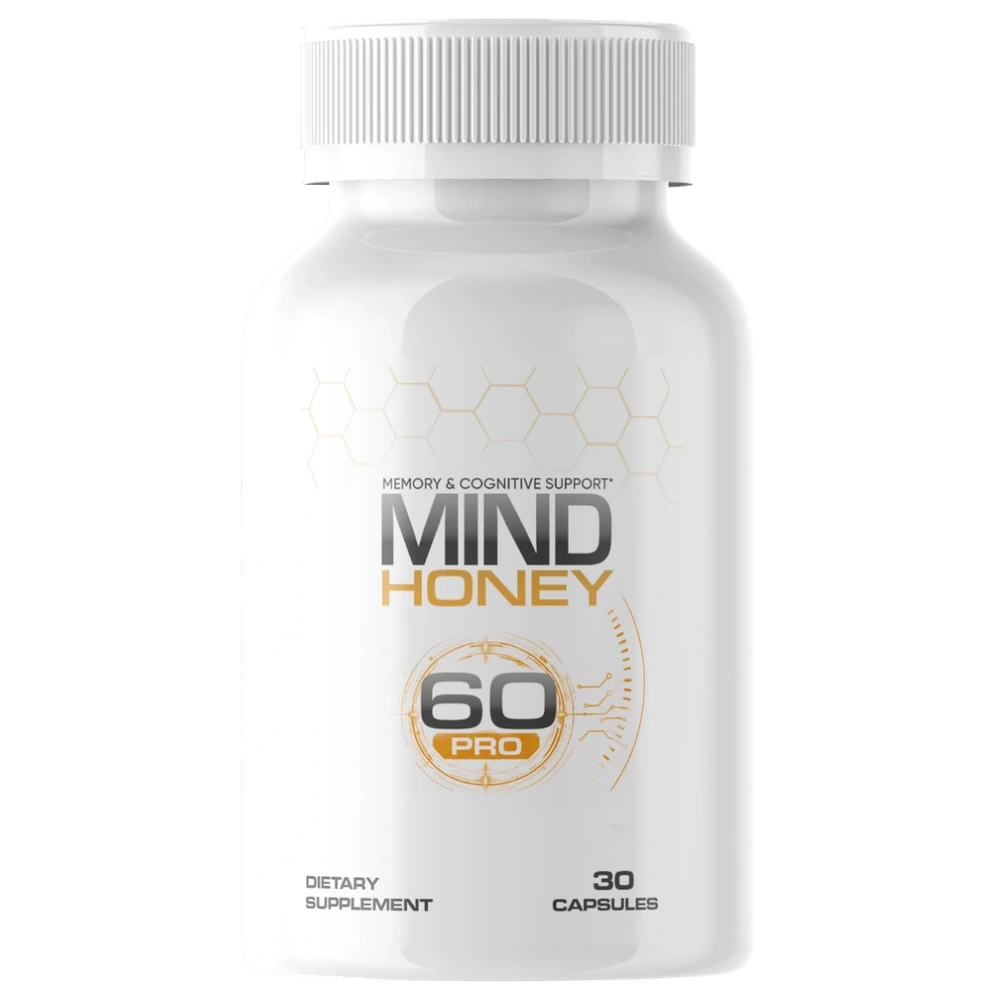
Read the guides, then look at Mind Honey Pro
Seven actives with every amount printed, one capsule a day, and 180 days from the date of purchase to change your mind.
Two bottles $158 · six bottles $294 · 180-day money-back guarantee
Order Mind Honey Pro On The Official WebsiteOne capsule a day · 30 per bottle · lot MIN-26/TH-5324