Mind Honey Pro Official Website › Blog › What Niacin At 47% Buys
What Niacin At 47% Of A Day Actually Buys
On a panel where five rows sit far below their research doses, one row is at an amount its own reference intake would recognise. This is what that row is, what the percentage beside it means, who it is worth something to, and why the cognition research on niacin is weaker than the adequacy research.
- Niacin is vitamin B3, and the body converts it into the coenzymes that carry electrons through energy metabolism.
- The adult requirement is 16 mg NE a day for men and 14 for women.
- The tolerable upper intake level is 35 mg a day, and it was set on flushing.
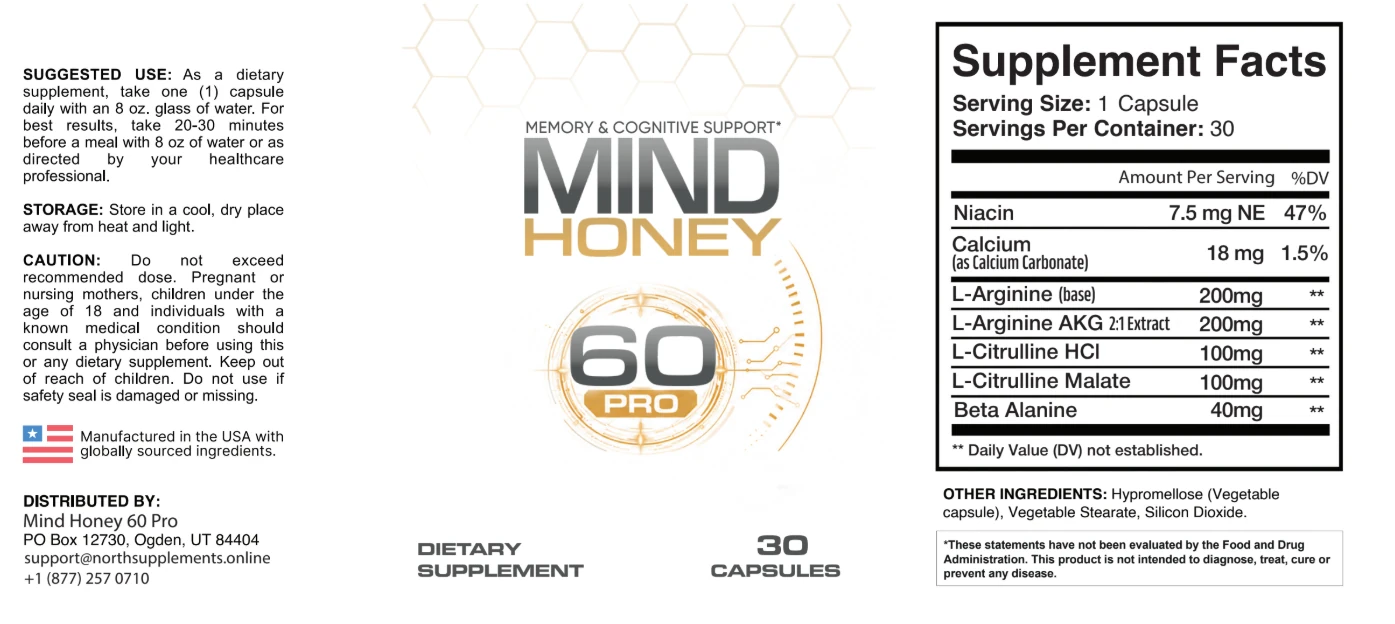
- 7.5 mg NE divided by 16 is 46.9 per cent, which is what a label printing 47% is doing.
- The cognition research on niacin is observational and is about niacin from food.
- What a vitamin row is worth depends entirely on whether the person taking it is short.
What niacin does
Niacin is vitamin B3. The body converts it into two coenzymes that carry electrons through energy metabolism, and every cell in the body uses them. That is not a marketing sentence; it is the whole mechanism, and it is an adequacy mechanism rather than an enhancement one.
The distinction is the most useful idea in this article. A nutrient with an adequacy mechanism does something dramatic when you are short of it and very little when you are not. Severe niacin deficiency produces pellagra, whose classical description includes a neurological component, which is where the connection to thinking originally comes from.
The plain-language summary is a short read and it stays inside those bounds, which is more than most writing on this subject manages.
What NE means, and why it matters
NE stands for niacin equivalents, and it is the unit the requirement is written in. It exists because the body can make niacin from tryptophan, an amino acid in dietary protein, at roughly 60 milligrams of tryptophan to 1 milligram of niacin.
So a niacin equivalent counts both the vitamin itself and what the diet's protein can produce. A label printing NE is using the same unit as the reference intake, which means 7.5 mg NE can be set directly beside 16 mg NE with no conversion.
That is a small piece of good practice and it is worth noticing, because a label printing plain milligrams of nicotinic acid or niacinamide leaves a reader doing an extra step to compare it with anything.
The five numbers that settle this row
| The figure | What it is | Where it comes from |
|---|---|---|
| 14 mg NE a day | The adult requirement for women | The Institute of Medicine reference intake chapter |
| 16 mg NE a day | The adult requirement for men | The same chapter |
| 35 mg a day | The tolerable upper intake level, set on flushing | The same chapter |
| 7.5 mg NE | A typical row on a cognition capsule | The printed panel |
| 47% | That row as a percentage of a day | 7.5 divided by 16, printed on the label |
Five numbers, all public. A panel printing a percentage against them is inviting a reader to check the arithmetic, and it comes out.
The Institute of Medicine chapter is where the first three come from, and they have the rare quality of being settled. Most of the amounts argued about on a supplement shelf have no official yardstick at all; this one has three, and they have not moved.
Run the arithmetic and a label printing 47% is being accurate. Seven and a half divided by sixteen is 46.9 per cent. It is also well under the ceiling: 7.5 mg is about a fifth of the 35 mg upper intake level, which is where a vitamin in a daily capsule ought to sit.
- The row is comparable with a requirement, which almost nothing else on a cognition panel is.
- The percentage on the label is checkable and correct.
- The amount is comfortably under the published ceiling.
- The unit matches the unit the requirement uses.
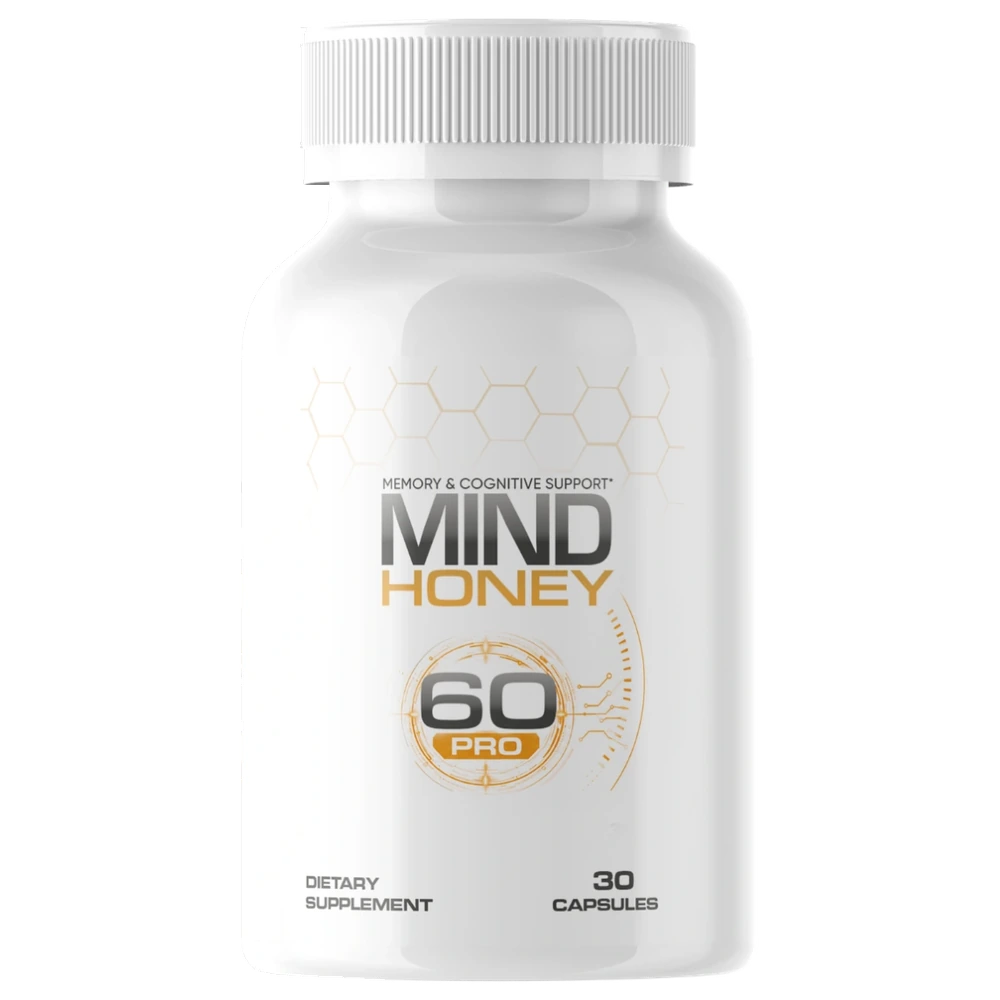
Order Mind Honey Pro for the row that does what a label says
Niacin at 47 per cent of a day, six more printed amounts beside it, one capsule daily, and 180 days from purchase to change your mind.
Two bottles $158 · six bottles $294 · 180-day money-back guarantee
Order Mind Honey Pro On The Official WebsiteOne capsule a day · 30 per bottle · lot MIN-26/TH-5324
Who 47 per cent is worth something to
| Who you are | What 47 per cent of a day adds | What to expect |
|---|---|---|
| Eating a varied diet with meat, fish or fortified grains | Very little. Niacin is widespread and the requirement is modest | Nothing noticeable, and nothing wrong with that |
| Eating less than you used to, which is common with age | A meaningful share of a requirement that has not fallen | Adequacy rather than an effect. Correcting a shortfall is invisible when it works |
| On a restricted or repetitive diet | A real contribution, and the case for a B vitamin at all | Worth discussing with whoever knows your whole intake |
| Already taking a B-complex or a multivitamin | An overlap worth adding up | The ceiling is 35 mg a day; two products can approach it together |
Four readers, one row, and four different answers. The value of a vitamin row depends entirely on the eater.
The second row of that table is the one this category is really sold to. Appetite tends to fall with age, meals get smaller and more repetitive, and the requirement does not fall with them. A vitamin row at half a day's worth closes part of a gap that is easy to acquire without noticing.
The fourth row is the one worth checking. Someone already taking a B-complex, a multivitamin and a fortified cereal can accumulate more niacin than any single label suggests, and the ceiling is a real number rather than a formality.
What the cognition research actually looked at
This is where a reader should slow down, because the gap between what the research says and what it gets used for is wider here than almost anywhere else in this category.
The Chicago Health and Aging Project analysis followed thousands of older adults and compared quintiles of niacin intake from FOOD against incident Alzheimer's disease and cognitive decline. It is observational, it is about diet, and it is not a trial of a supplement at any dose.
Observational nutrition research has a well-known difficulty: people whose diets are rich in one nutrient differ from people whose diets are not, in dozens of ways that are hard to adjust for. A finding like this is a reason to eat well, which is a conclusion nobody needs a supplement to act on.
A 2025 observational study of B-vitamin intake and cognition reaches a similar kind of conclusion with similar limits. Two observational studies pointing the same way is more interesting than one, and it is still not a trial.
Niacin adequacy matters for the nervous system and severe deficiency is a neurological condition. Beyond adequacy, the evidence that more niacin improves thinking in well-nourished people is observational, dietary, and not about supplements.
The flushing question, and where it belongs
Niacin's reputation for flushing comes from a different product entirely. Gram-scale nicotinic acid has been used for decades to alter blood lipids, and at those doses the flush is a familiar and sometimes intolerable effect.
That is also where the ceiling comes from. The 35 mg upper intake level was set on flushing, not on organ toxicity, which is why it is low relative to the doses used therapeutically under supervision.
At 7.5 mg NE the question does not arise. A reader who has read about the flush and is wary of a vitamin row at a fifth of the ceiling is carrying a caution from a dose the product does not contain, which is worth saying once and clearly.
Why this row is the strongest one on a panel like this
On a seven-row cognition panel where five rows are amino acids studied in grams, the vitamin row is the one that does what a label appears to do: it names an amount, sets it against a published requirement, and the arithmetic comes out.
That is a modest thing to be able to say and it is more than most of the shelf can manage. It is also, on a panel like this, the honest centre of the purchase: a B vitamin at roughly half a day's requirement, taken once daily by an adult who wants that vitamin.
None of which makes the other six rows pointless. It makes them a different kind of thing: printed, checkable, and below the amounts their own research used, which is a fact a reader can weigh rather than a secret anybody kept.
The supplement facts page works through the whole panel including the one percentage that does not reconcile cleanly, and the ingredients page sets every row beside the dose its own research used.
References
- Niacin. In: Dietary Reference Intakes for Thiamin, Riboflavin, Niacin, Vitamin B6, Folate, Vitamin B12, Pantothenic Acid, Biotin, and Choline. Institute of Medicine, National Academies Press. RDA 16 mg NE/day for men and 14 mg NE/day for women; Tolerable Upper Intake Level 35 mg/day, set on flushing. https://www.ncbi.nlm.nih.gov/books/NBK114304/
- Morris MC, Evans DA, Bienias JL, et al. Dietary niacin and the risk of incident Alzheimer's disease and of cognitive decline. J Neurol Neurosurg Psychiatry. 2004;75(8):1093-9. PMID 15258207. (Observational; niacin from FOOD across intake quintiles, not a supplement trial.) https://pubmed.ncbi.nlm.nih.gov/15258207/
- Chen Q, Huang J, Shi X, et al. Associations between dietary B vitamin intakes and cognitive function among elderly individuals: An observational study. Nutrition. 2025;134:112716. PMID 40056822. https://pubmed.ncbi.nlm.nih.gov/40056822/
- Niacin. MedlinePlus Medical Encyclopedia, U.S. National Library of Medicine. https://medlineplus.gov/ency/article/002409.htm