Mind Honey Pro Official Website › Blog › What This Panel Leaves Out
What This Panel Leaves Out: A Stimulant-Free Approach
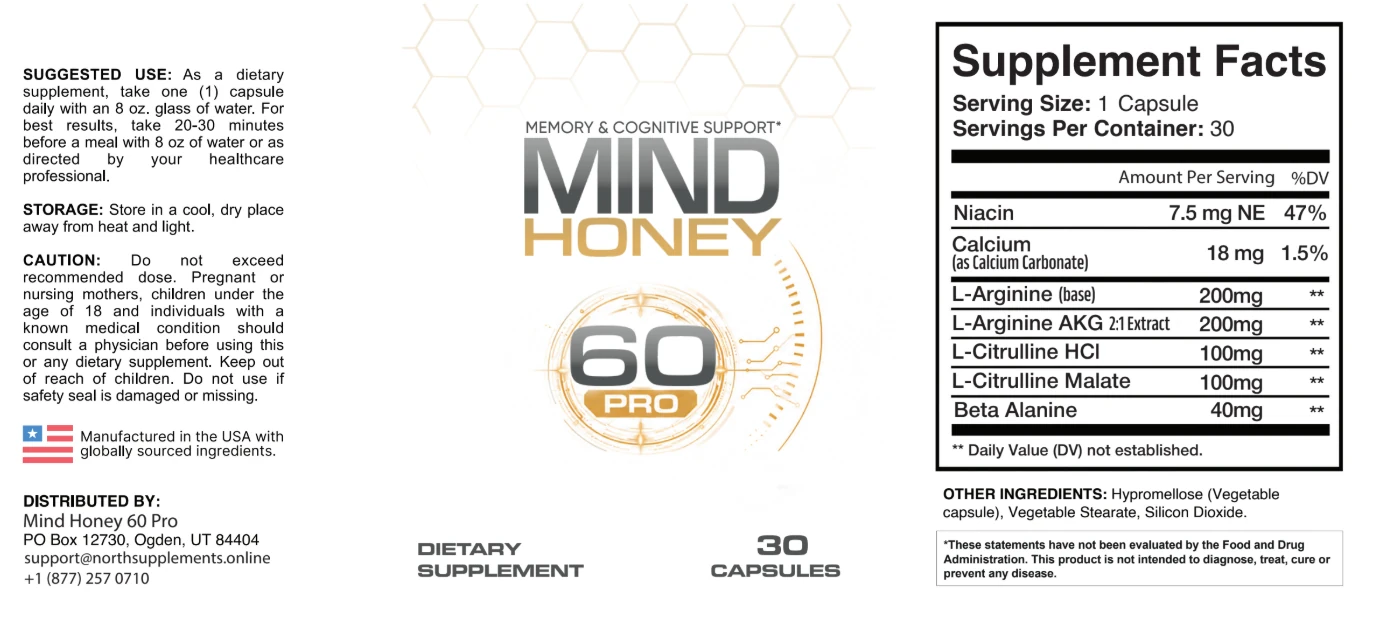
Seven rows are printed on this label, and none of them is caffeine, or anything chemically like it. That is a choice with a research literature attached on both sides of the ledger: what a stimulant reliably buys in the short term, and what it reliably costs when it is stopped. Reading both sides is the only honest way to say what leaving caffeine off a formula actually trades away, and what it does not.
- A 2016 clinical overview of coffee and caffeine on brain health describes real, well-established benefits at ordinary intakes: more alertness, better concentration, improved mood, and links to lower long-run risk of several neurological conditions.
- A Cochrane review of caffeine in shift workers found it reduced errors and improved several measures of cognitive performance against placebo, with a high risk of bias in the underlying trials and no data on actual injury outcomes.
- A comprehensive 2004 review validated ten specific caffeine withdrawal symptoms, found headache in about half of people who stop, and found withdrawal can start from a daily intake as low as 100 mg.
- A 2026 randomized trial found that caffeine avoidance itself, in regular coffee drinkers, was associated with more headaches and with worse headache severity when one occurred.
- None of this panel's seven rows is a stimulant, and none of the alertness research above applies to it. What follows is what that absence buys, and what it does not.
The ingredient that is not on this label
Read the Supplement Facts panel top to bottom and the seven rows are niacin, calcium carbonate, L-arginine in two forms, L-citrulline in two forms, and beta alanine. None of them is caffeine, guarana, green tea extract, theacrine, or any other compound that acts on the body the way a stimulant does. The full panel is worth reading directly; this article is about what that specific absence means, set against research on what a stimulant does and costs.
That is not an oversight. It is a formulation choice, and like every formulation choice it trades something for something. The honest way to describe the trade is to look at what caffeine's own research literature actually shows, in both directions, rather than assume either that stimulant-free automatically means gentler, or that it automatically means weaker.
What caffeine actually does, measured
A 2016 clinical overview in Practical Neurology, written for clinicians asked about this by their patients, is a useful starting point precisely because it is not selling anything. Its summary of ordinary caffeine intake, defined as around 200 mg in one sitting or up to 400 mg a day, roughly two and a half to five cups of coffee: it increases alertness and well-being, helps concentration, and improves mood. The same review notes that lifelong coffee and caffeine consumption has been associated with a lower long-run risk of cognitive decline, stroke, Parkinson's disease and Alzheimer's disease in the population data available, alongside the more familiar acute effects.
It is not a one-sided endorsement. The same paper notes caffeine can disturb sleep in sensitive individuals, can raise anxiety in a small subset of people, and that a minority experience withdrawal. Its overall conclusion, though, is that daily coffee and caffeine intake can be part of a healthy balanced diet, including for older adults.
A Cochrane review, and its own caveats
A Cochrane systematic review looked specifically at caffeine for preventing injuries and errors in shift workers and people with jet lag, pooling thirteen trials. The trials that measured errors directly found caffeine significantly reduced the number of errors compared with placebo. Pooled effects across cognitive domains favoured caffeine for memory, orientation and attention, and perception, though not clearly for verbal function.
The review's own caveats matter as much as its headline. No trial in its set actually measured injuries, only errors and cognitive test performance, so the injury-prevention question it set out to answer remains open. It also flagged a high risk of bias around allocation concealment and selective reporting in the underlying trials, and noted that most of the evidence came from young participants in simulated conditions, which may not generalise cleanly to older shift workers in real settings. Its bottom line, even with those caveats: there is no reason for healthy people who already use caffeine at recommended levels, to stop using it for alertness.
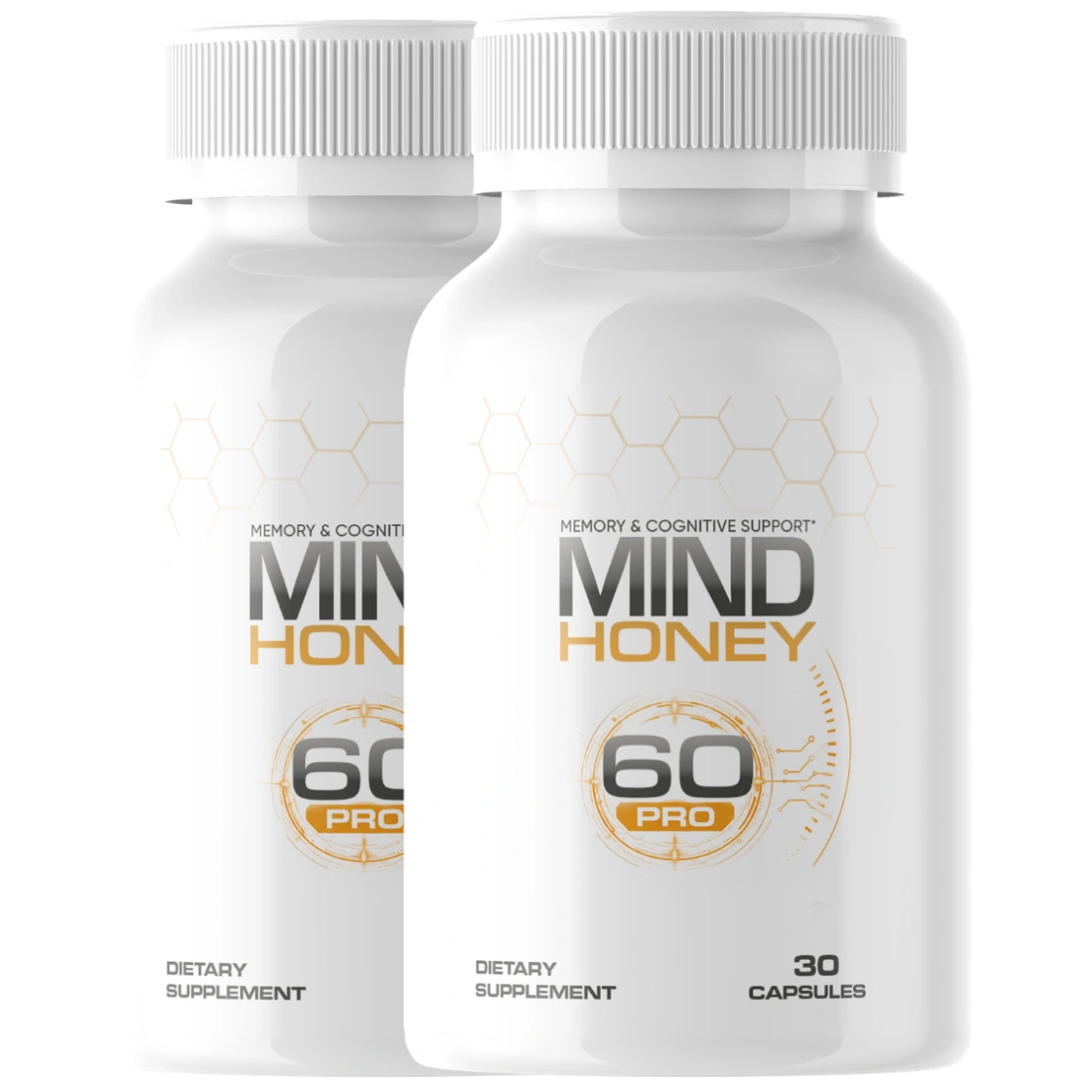
Order Mind Honey Pro knowing exactly what is, and is not, on the panel
Seven rows, none of them a stimulant. Reading both sides of the caffeine research is what makes that a real comparison rather than a marketing line.
Two bottles $158 · six bottles $294 · 180-day money-back guarantee
Order Mind Honey ProOne capsule a day · 30 per bottle
What stopping caffeine costs
The other half of the ledger is withdrawal, and it has been studied in more depth than most people expect. A comprehensive 2004 review in Psychopharmacology examined 57 experimental studies and 9 surveys, and validated ten specific withdrawal symptoms against strict criteria: headache, fatigue, decreased energy or activeness, decreased alertness, drowsiness, decreased contentedness, depressed mood, difficulty concentrating, irritability, and a foggy or unclear feeling.
Across the studies it reviewed, headache appeared in about 50% of people who stopped caffeine, and 13% experienced distress or impairment severe enough to interfere with normal activity. Onset was typically 12 to 24 hours after the last dose, peaking between 20 and 51 hours, and lasting two to nine days. Importantly, symptoms could appear from a daily intake as low as 100 mg, roughly one cup of coffee, and got more common and more severe as the prior daily dose increased. A 2009 follow-up study in the same journal, surveying nearly 500 adults, found those withdrawal symptoms clustered into three distinct groups, fatigue-and-headache, dysphoric mood, and flu-like somatic symptoms, and that people with the highest habitual intake were over four times more likely to report the fatigue-and-headache cluster than the lowest-intake group.
A 2026 trial on withdrawal headache specifically
A 2026 randomized case-crossover trial in Scientific Reports pushed this further with a design built to avoid the recall bias that weakens most withdrawal research: regular caffeinated-coffee drinkers were randomly assigned periods of caffeine avoidance and periods of normal intake, tracked prospectively rather than recalled afterward.
Caffeine avoidance itself was associated with more headaches among these regular drinkers, and when a headache did occur during an avoidance period, it tended to be more severe than one that occurred during a normal-intake period. This is a genuinely different kind of evidence than a survey: a real-life, prospective, repeated-measures test of what happens specifically when a habitual coffee drinker stops, and it landed on the same symptom the older reviews identified as the most common one.
What a stimulant buys and costs, side by side
| Effect | Evidence | What it found |
|---|---|---|
| Alertness, mood, concentration | 2016 clinical overview | Real, well-established at ordinary intakes; also linked to lower long-run risk of several conditions. |
| Errors and cognitive performance | Cochrane review, shift workers | Significantly fewer errors and better performance vs. placebo, with real caveats about bias and generalisability. |
| Withdrawal symptoms | 2004 review, 57 studies | Ten validated symptoms; headache in about half of people who stop; can start from 100 mg/day. |
| Withdrawal headache, prospectively tested | 2026 randomized trial | Avoidance itself linked to more headaches, and worse ones, in habitual drinkers. |
The benefit and the cost are both real, both well-documented, and both specific to caffeine. A formula that leaves it out does not inherit either side of this table.
What stimulant-free means, and does not mean
Leaving caffeine off a label means this panel will not produce the acute alertness bump the research above documents, and it also means a user will not be at risk of the withdrawal symptoms that same research documents, because there is nothing here to withdraw from. Both halves of that sentence are true at once, and neither one is a claim about what the seven ingredients that are on this label do instead; the article on this panel's actual mechanism covers that separately.
It also does not mean this formula is automatically gentler in every sense, or that stimulant-free formulas as a category carry no considerations of their own; it means specifically that the caffeine-shaped costs and benefits above do not apply here, because the ingredient they are about is not in the capsule. A stimulant-free label is also not, by itself, a claim about speed of onset, tolerance, or anything else caffeine research covers; those are properties of caffeine specifically, documented in the studies above, not properties of "not having a stimulant" as a general category.
The withdrawal research is worth reading with one more distinction in mind. It describes what happens when a person who already consumes caffeine regularly stops. It says nothing about someone who has never used a caffeinated nootropic and is starting a stimulant-free one from a caffeine baseline of zero; for that reader, none of the withdrawal literature above is relevant at all, because there is no habitual intake to come off of.
A note on what "ordinary intake" means
The 2016 clinical overview's reassurance is specifically about intake at or below roughly 400 mg a day, around five cups of coffee, a threshold food regulators in the research it cites have treated as not harmful for most adults. The Cochrane shift-work review does not specify a single dose across its thirteen trials, since doses varied by study, which is one more reason its authors flagged generalisability as limited. Neither review is an argument for taking more caffeine than a person already tolerates well; both are simply the evidence behind what a moderate, familiar intake does, set against what a formula with none of it does not do.
If you are switching from a caffeinated formula
- Expect the caffeine withdrawal window, not a product problem. If a previous stimulant-based formula is being dropped at the same time this one is started, headache and fatigue in the following two to nine days are consistent with caffeine withdrawal as reviewed above, not with anything in this panel.
- Tapering the old stimulant, rather than stopping it abruptly, is the change the withdrawal literature would predict helps most, though that is a decision for whoever prescribes or recommends the prior product, not this label.
- A stimulant-free formula will not replace caffeine's acute alertness effect. The Cochrane review's error-reduction and performance findings are specific to caffeine and do not transfer to a different mechanism by default.
- None of this is medical advice about managing withdrawal from any other product, including over-the-counter stimulants or medications; a pharmacist is the right first call for that.
References
- Nehlig A. Effects of coffee/caffeine on brain health and disease: What should I tell my patients? Pract Neurol. 2016;16(2):89-95. PMID 26677204. https://pubmed.ncbi.nlm.nih.gov/26677204/
- Ker K, Edwards PJ, Felix LM, Blackhall K, Roberts I. Caffeine for the prevention of injuries and errors in shift workers. Cochrane Database Syst Rev. 2010;2010(5):CD008508. PMID 20464765. https://pubmed.ncbi.nlm.nih.gov/20464765/
- Juliano LM, Griffiths RR. A critical review of caffeine withdrawal: empirical validation of symptoms and signs, incidence, severity, and associated features. Psychopharmacology (Berl). 2004;176(1):1-29. PMID 15448977. https://pubmed.ncbi.nlm.nih.gov/15448977/
- Ozsungur S, Brenner D, El-Sohemy A. Fourteen well-described caffeine withdrawal symptoms factor into three clusters. Psychopharmacology (Berl). 2009;201(4):541-8. PMID 18795265. https://pubmed.ncbi.nlm.nih.gov/18795265/
- Randa L, Lee C, Rosenthal DG, Josephson SA, Wilson E, Olgin JE, Marcus GM. Acute effects of caffeine withdrawal on headache among regular caffeinated coffee drinkers. Sci Rep. 2026;16(1):23299. PMID 42174033. https://pubmed.ncbi.nlm.nih.gov/42174033/